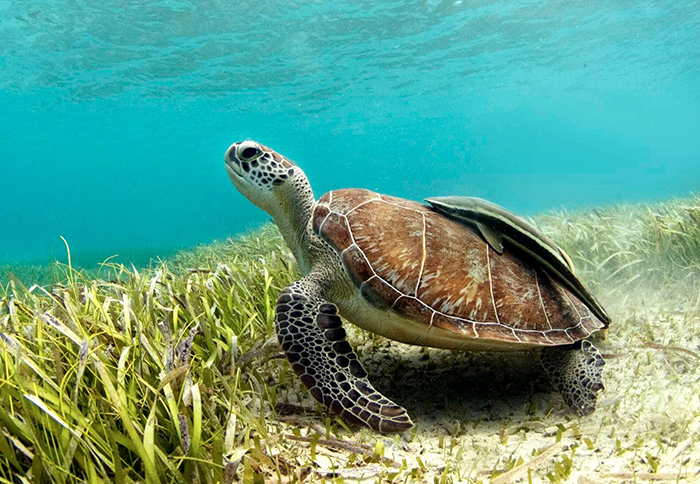
A green sea turtle swims in an ever changing world, full of opportunity. photo by Voyageurs Du Monde
2025 brought good news regarding the comeback of some beloved species as a result of restoration practices.
Despite the many species on the brink of extinction, population numbers in species including the green sea turtle have started to grow. With an ever-increasing concern for human effects on the natural world, restoration efforts have begun to show success in multiple areas around the globe.
For more than four decades, the green sea turtle (also known as Chelonia mydas in the scientific world) was considered a highly endangered species due to over harvesting practices for their shells and eggs, as well as habitat loss. As people began noticing the species’ drastic decline, restoration practices were put into place. According to NOAA Fisheries, the green sea turtle was listed under the Convention on International Trade in Endangered Species of Wild Fauna and Flora (CITES) in 1981. Additionally, as of 1988, the Endangered Species Act (ESA) requires the U.S. Fish and Wildlife service to implement recovery plans. The main goals for these organizations consist of decreasing the bycatch in commercial fishing, protecting nesting and foraging sites, reducing vessel strikes, and reducing the ingestion and entanglement of debris. Through the implementation of these goals, sea turtle populations have started to increase in Florida, California, and Hawaii. As of 2025, the global population of green sea turtles has increased by over 28%. These turtles are vital to the ecosystems they call their home due to their grazing habits, which keep sea beds healthy for other marine life. The increase in population numbers within this specific species could very well benefit the ocean’s overall health and stability. The increase in green sea turtle numbers proves that through the implementation of restorative practices, society has the ability to combat its past destructive practices.
Other species have started to rebound as well. The Hawaiian monk seal population has seen upward curves, as record amounts of pups have been born in the main Hawaiian islands. Successful rehabilitation and targeted interventions such as providing medical care and relocating groups to less shark-infested waters have allowed the species’ birth rates to increase. Similar to the green sea turtle, 4Ocean states, the Hawaiian monk seal balances the ecosystem through predatory fish and crustacean regulation. According to California Trout, large numbers of fall-run Chinook salmon have been reported returning to the salmon run, after the Klamath dam was removed a year prior. This example highlights the importance of balancing man-made and natural wonders in order to achieve coexistence. In Uganda, the mountain gorilla population has surpassed over 1,000 individuals after previously being close to extinction, due to anti-poaching regulations and habitat conservation. UNESCO explains that the mountain gorillas have attracted tourists as well as researchers, wanting to track the species’ growing numbers.
As society looks ahead to 2026, restoration efforts are focused on a wide variety of species all around the globe. As of now, conservationists are expecting Kākāpō parrots to experience their best breeding season yet, in addition to an overarching increase in white stork and wolf populations. Despite the many hardships society places on the natural environment, all hope is not lost. The green sea turtle marks a change in perspective and initiates action. As long as people continue to share compassion for species other than ourselves, the world has the ability to recover.