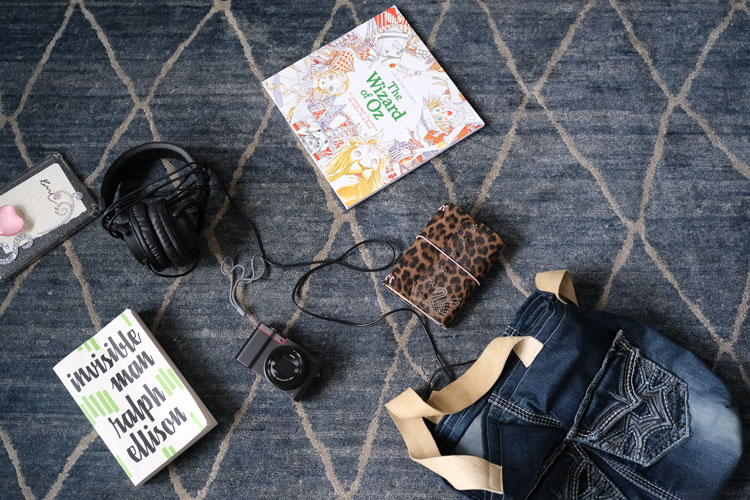
Analog bags can include many different objects, no two are the same. photo by Sony Calhoun
Why I love the analog trend–and why you should too.
Gen Z is the first generation in human history to have not known a life before the digital age. Our lives have been filled with screens, from the computers in our schools to the phones in our pockets. While the constant presence of technology and the internet may seem normal to us, the truth is, our teenage years are drastically different than any other generation’s.
At first, the new digital age was exciting. When the “World Wide Web” launched in 1991, the world’s horizons broadened right in front of our eyes. Humans were finally able to communicate with the whole world at any given moment in time, and there were no limits to what we could do. With the introduction of social media, the way humans socialized with each other–and the world–was forever changed.
For the past 20 years or so, our lives have been dominated by “smart” technology. Smart phones, smart watches, even smart fridges! You name it, there’s a “smart” version of it. Since society has become so immersed within a digital world, it is almost as if our lives are now oversaturated by technology. It seems like everywhere you look, there’s a screen in your face. Many simple joys of human life have been digitized–and minimized–to fit onto a screen the size of one’s palm. Every day, something you can do in real life is redesigned so that you can do it on a screen.
While this era of innovation was once refreshing, it now feels suffocating. Now, this is a recent phenomenon, so in lieu of referring to this period as “The Digital Age,” I will refer to it as “The Brainrot Age,” a reference to the recent decline in literacy rates. For centuries, humans have kept a rotation of tasks throughout the day, often alternating where they take place, and which people they were doing it with. For example, a teenager P.B.A. (Pre-Brainrot Age) had a schedule that was something a little like this:
-Going to school
-Hanging out with friends after school
-Going to get dinner
-Doing homework
-Talk to friends (AOL, E-mail… Something digital, but still ancient)
-Hobby time (Reading, video games, art, etc..)
In the P.B.A., completing these tasks required going to different places and talking to different people. Nowadays, almost all of these things can be accomplished by a computer, not even requiring one to leave bed for the whole day. This may appear as evidence of innovation or societal advancement, however, it actually indicates the opposite. Society has begun to lean on technology too much, and has stopped exercising mental skills. Since ChatGPT became available for public use in November of 2022, literacy rates have decreased around the world. Additionally, AI and other data centers are causing immeasurable damage to the planet by using freshwater and causing droughts.
In this new dystopian chapter of the digital age, netizens(citizens of the internet) from around the world suddenly feel the urge to find an escape from the internet. Gen Z has taken a turn back to time, introducing a new trend: the analog trend. More specifically, a new term has emerged on the internet: “the analog bag.” The concept of the analog bag is simple: it’s a bag full of activities that don’t involve using a phone. While tech and gadgets are often included in analog bags, it is often older tech that has only one intended purpose (i.e. ipods, Nintendo DS, Digicams, etc.) The objective of the analog bag is to replace the hours we spend on the internet with physical media or activities. Many people like to include books, journals, Sudoku puzzles, and fidget toys in their analog bags. There aren’t any rules to creating an analog bag, just one goal: to get off your darn phone!
While the analog bag trend is currently thriving on the internet, there is also a large community of people who have doubts about the trend. They question the authenticity of the analog bag if people are posting about it online, which can come off as performative. While I understand where they’re coming from, I have to disagree. The truth is, we will never be able to fully eliminate the internet from our lives. It’s here to stay. The point of the analog trend was never to remove the internet from one’s life entirely, but to stop allowing the internet to consume our lives the way it has in recent years. Sharing the ways we are making lifestyle changes on the internet isn’t hypocrisy, it’s beneficial. So many people spend hours scrolling on the internet, and seeing one video about the analog trend might inspire them to make a change in their own lifestyle.
Getting off the internet and involving oneself in real life activities has many benefits. It helps your brain to not be scrolling on the internet all day, and engaging in mind exercises like crosswords, Sudoku, and other puzzles engages your brain and helps keep you sharp. Lowering exposure to blue light can help regulate your nervous system and sleep cycles. Additionally, the internet can be a depressing place, living in the real world and spending time learning about yourself instead of distracting your mind with a phone can be hugely beneficial for your mental health.
An analog bag doesn’t have to be something fancy, just use a bag you already own and see what items you can find around your house to put inside. Anything you enjoy–books, sketchbooks, puzzles, even handheld games–are perfect additions to make your personal analog bag. Give it a try, and see how the world around you reveals its beauty in the absence of the noise of the internet.