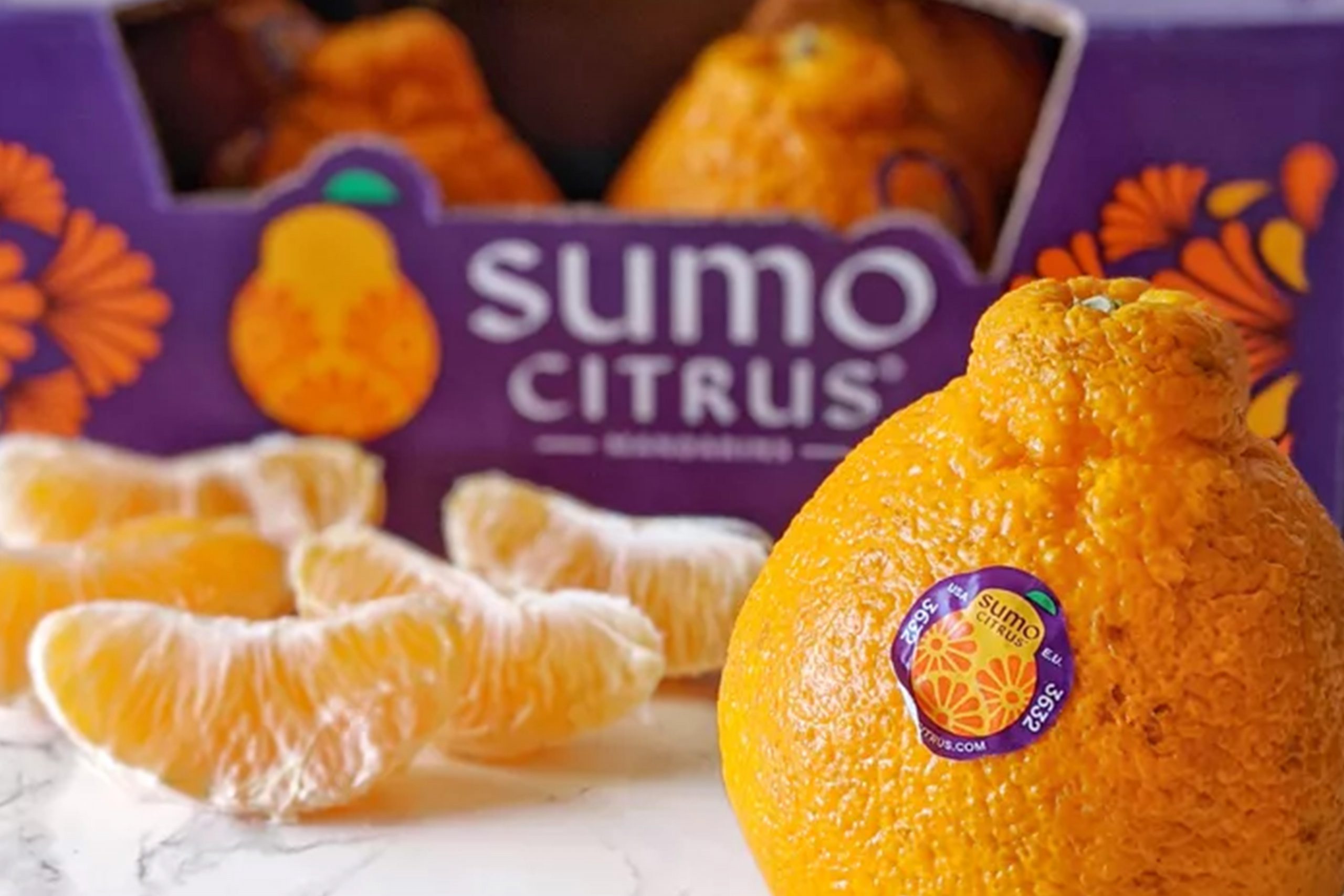
The mandarin-variety, sumo citrus, is rapidly gaining popularity. photo courtesy of Sumo Citrus
Sumo citrus, the mandarin-hybrid citrus variety, is characterized by its high cost and popular taste.
I tried a sumo citrus for the first time this year and, although it’s not technically an orange, it completely altered my opinion on oranges. They are one of the best fruits I have ever tried. I’ve gone from only having orange slices at my elementary school soccer games or overnight camp to incorporating them into my everyday routine. As sumo citrus season ends, I am deeply saddened to see them go.
Small oranges like tangerines and clementines are a common snack for me at sporting events and friend’s houses, and I ate canned mandarin orange slices every day for lunch in first grade, but I’ve never sought out or thoroughly enjoyed a more traditional, full-size orange variety. Sumo citruses were introduced to my house in January when the growing season began and they were always gone within a few days of purchasing, eaten by me and my mother. I began to notice that my friends and even my teachers were also hooked so I became curious as to what makes a sumo citrus so unique and desirable.
Sumo citruses were first grown in Japan in the 1970s. This new variety was made as a combination of satsuma, orange, and mandarin varieties. Sumo citrus seedlings were first brought to the U.S. in 1998, as outlined by the Sumo Citrus official website, and they are now grown for commercial production exclusively in California and Australia. Sumo citrus is naturally seedless and non-GMO, with a notch on the top of it which acts as a lid, making it incredibly easy to peel. Despite all of the delightful qualities of sumo citrus, they have a short growing season, just from January through April, and they are noticeably expensive. The biggest reason for this cost is that the growing process of sumo citrus requires a lot of human labor. Sumo citrus are pruned by hand, hand-picked, and hand-packed. This results in sumo citrus costing around $4-6 per pound. For comparison, the base price of one sumo citrus at Walmart is $2.48, and a blood orange is priced at $1.49 each.
Although they are costly, sumo citrus are extremely flavorful and sweet and their popularity signifies their enjoyability. Sumo citrus is a relatively new variety, it made its U.S. debut in the Whole Foods grocery market in 2011 and retail expanded from then on. Despite how recently they were introduced to the U.S., the variety has gained significant social media attention. The sumo citrus site highlights that the citrus variety has been “in the news,” discussed by news networks such as CNN and the New York Times. On the sumo citrus official website (sumocitrus.com), there is information available about the history and growth of sumo citrus as well as recipes and merchandise. I will be impatiently waiting for the return of sumo citrus next January.